

Research shows today’s employers are looking for more than enthusiasm. They consistently demand two essentials that set candidates apart, and The Hotel School Australia offers them both.
Recent data from the Australian Bureau of Statistics (ABS) and Jobs and Skills Australia provides clear answers. Employers increasingly demand formal qualifications as well as practical experience.
Stakeholder Engagement Manager at The Hotel School Australia (THSA) Vicki Mathias, has many years’ experience working in industry management roles in the UK and Australia, and understands what employers are looking for. She explains, “A degree plus real-world experience seems to be the winning formula for employers and for graduates who want to start their careers with confidence. That’s why choosing an education pathway that combines both is becoming more and more important.” 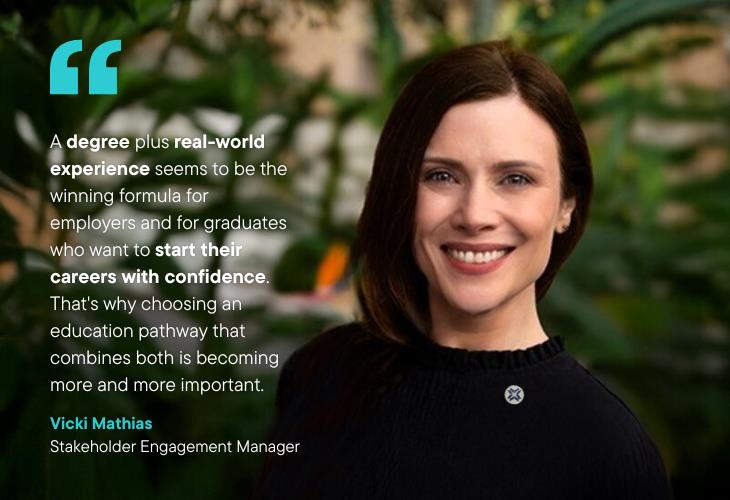
Employers Want Skills. And Degrees Matter
The job market is becoming more highly skilled. According to employment projections, over 90% of new jobs will require advanced vocational education or university qualifications. In fact, Skill Level 1 roles (those requiring a bachelor’s degree or higher) are expected to account for 51% of employment growth by 2034 (Source: Jobs and Skills Australia & Victoria University, 2024).
“For hospitality professionals, this trend is critical. A hotel management degree is no longer just a nice-to-have, it’s a key requirement for leadership roles and career progression.” said Ms Mathias. “Employers want graduates who understand business fundamentals, customer service excellence, and operational management. They also value adaptability and strategic thinking, which come from formal tertiary education.”
THSA offers degrees designed to meet these expectations, including the Bachelor of Business in Hotel Management and Master of Business in Global Hotel Leadership. These programs provide the academic foundation employers demand, covering areas such as business, marketing, human resources, and sustainable practices, all tailored to the hospitality industry.
Education Improves Job Security
Why does a degree matter so much? Because it significantly reduces unemployment risk. ABS data shows that unemployment among 25–34-year-olds drops to just 3.5% for bachelor’s degree holders, compared to 19.4% for those with only Certificate I or II (ABS, 2021; Jobs and Skills Australia & Victoria University, 2024). This is a powerful indicator that education is one of the best investments for long-term career stability.
For students considering hospitality careers, a hotel management degree from THSA offers more than knowledge. It provides credibility.
“Employers recognise the value of graduates who have completed rigorous academic programs, and this recognition translates into better job prospects”, explains Ms Mathias.
Experience Counts: Two in Five Employers Require It
While qualifications are essential, employers also want experience. According to the Jobs and Skills Australia Recruitment Experiences and Outlook Survey, two in five employers require applicants to have work experience in the field (Jobs and Skills Australia, 2018–2019; Jobs and Skills Australia, 2025).
“This is where many graduates face a challenge. How are you expected to gain experience before you have even started your career?” said Ms Mathias.
THSA addresses this head-on by integrating 600 hours of internships into its degrees. These internships are not optional. They’re built into the curriculum, ensuring every degree student graduates with hands-on experience in real hospitality environments. This practical exposure helps students develop confidence, build industry contacts, and demonstrate reliability. These are qualities employers value highly.
“Internships also provide opportunities to apply classroom learning in real-world settings, bridging the gap between theory and practice,” explains Ms Mathias. “Our Professional Learning Centre team works closely with our Industry Partners to ensure students are exposed to real-world experiences in and out of the classroom. This is not only through internships but also industry visits and excursions, workshops, guest speakers, and hands-on practical experiences.” 
What Employers Are Looking For
Employers in hospitality, events, and tourism consistently highlight three key attributes they seek in candidates:
- Formal Qualifications
A recognised degree signals commitment and capability. - Practical Experience
Hands-on exposure to industry operations - Soft Skills (also called Employability Skills)
Communication, teamwork, and problem-solving
What Students Are Looking For
Students seeking management roles in hospitality, events, and tourism are looking for:
- Recognised Qualifications
A formal qualification in the sector that signals interest, commitment and capability. - Practical Experience
Hands-on exposure to real-world skills - Professional Networks
Connections that open doors to opportunities
THSA graduates tick all these boxes. With a hotel management degree where students can choose to major in hospitality, tourism or event management, plus that includes 600 hours of internships, students leave with both academic credentials and real-world experience.
“Our students also value our strong industry partnerships, which provide networking opportunities and career pathways,” said Ms Mathias.

Hospitality Is a Major Employer. And It’s Growing
The Accommodation and Food Services sector currently employs 7% of Australia’s workforce, making it one of the largest sources of jobs (Australian Bureau of Statistics [ABS], 2025). Looking ahead, the future is even brighter: this sector is projected to add over 110,000 jobs by May 2034, ranking among the top five industries for employment growth (Jobs and Skills Australia & Victoria University, 2024).
This growth is driven by population trends, tourism demand, and lifestyle changes. For young people entering the workforce, hospitality offers flexibility, global mobility, and diverse career paths, from hotel management and event planning to tourism operations and customer experience roles.
“The projected growth in the sector is amazing, but remember that with growth comes increased competition for job seekers. Employers are looking for candidates who stand out, and that means having the right mix of education and experience,” cautioned Ms Mathias.
Hospitality Careers: A Global Outlook
One of the most exciting aspects of hospitality is its global reach. Skills gained in Australia can take graduates anywhere: from five-star hotels in Europe to resorts in Asia or cruise lines in the Caribbean. THSA’s programs prepare students for this international landscape, combining business knowledge with cultural awareness and customer service excellence.
According to the World Travel & Tourism Council (WTTC), Australia’s travel and tourism sector is forecast to inject a record $314.4 billion into the national economy in 2025, representing 11.4% of GDP and supporting 1.7 million jobs. This surge in economic contribution and employment highlights the growing demand for skilled professionals in hospitality and tourism, reinforcing the importance of formal qualifications and practical experience for those entering the industry.
As the industry evolves, other new opportunities are emerging in areas like sustainable tourism, event technology, and luxury experiences. Ms Mathias believes students should be excited about these developments in the dynamic hospitality, tourism and events sectors.
“With future major events such as the Men’s Rugby World Cup in 2027 and the Brisbane Olympics in 2032, the opportunities in our sector will only grow,” said Ms Mathias. “These global events create incredible demand across hospitality, tourism, and events, and new graduates will be ideally placed to take advantage of exciting career prospects.”
The Bottom Line: Education + Experience = Employer Confidence
The data is clear: employers want candidates who are qualified and experienced. The hospitality sector is growing, but so is job market competition. A hotel management degree from THSA, which includes 600 hours of industry internships, gives graduates the best possible start.
Ms Mathias concludes, “For young people entering the job market now, this combination is a game-changer. It means you’re not just meeting employer expectations; you’re exceeding them.”
Industry Partnerships at The Hotel School Australia
References
Australian Bureau of Statistics. (2025). Labour Force, Australia, Detailed, August 2025. Retrieved from https://www.abs.gov.au/statistics/labour/employment-and-unemployment/labour-force-australia-detailed/aug-2025
Jobs and Skills Australia, & Victoria University. (2024). Employment projections: May 2024 to May 2034. Retrieved from https://www.jobsandskills.gov.au/data/employment-projections
Australian Bureau of Statistics. (2021). Census of Population and Housing, 2021. Retrieved from https://www.abs.gov.au/statistics/people/population/population-census/latest-release
Jobs and Skills Australia. (2018–2019). Survey of Employers’ Recruitment Experiences. Retrieved from https://www.jobsandskills.gov.au/data/recruitment-experiences-and-outlook-survey
Jobs and Skills Australia. (2025). Recruitment Experiences and Outlook Survey (to date). Retrieved from https://www.jobsandskills.gov.au/data/recruitment-experiences-and-outlook-survey
World Travel & Tourism Council. (2025, June 12). Australia’s Travel & Tourism sector set to reach record $315BN in 2025. Retrieved from https://wttc.org/news/australias-travel-tourism-sector-set-to-reach-record-315bn-in-2025

